Virtual grid expansion
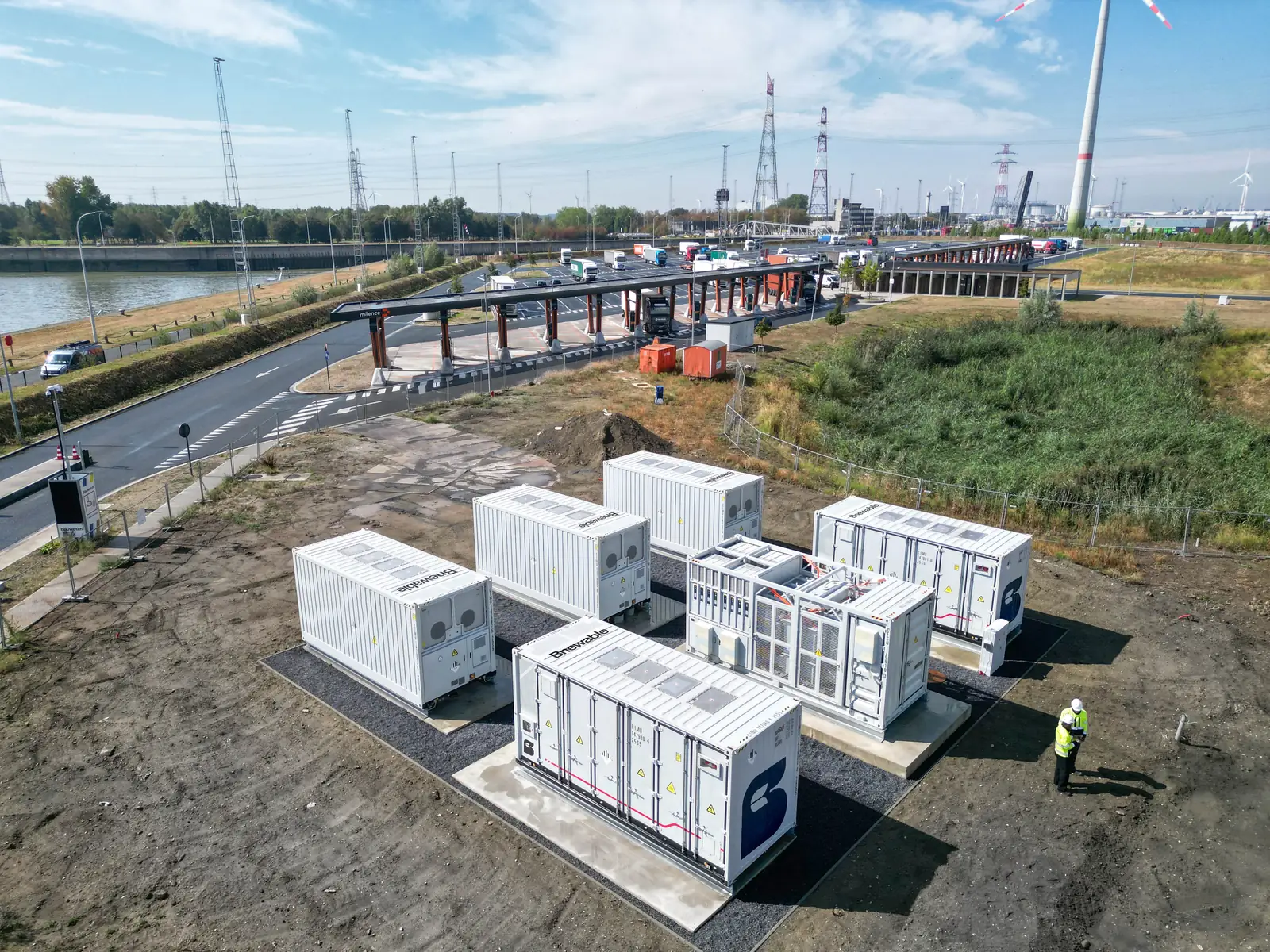
Bnewable's battery takes over when your site needs more power than your grid connection can handle. You get the extra capacity of a grid upgrade, without the years of waiting or the costs that come with it.


Use case - Electrify fleet
Bnewable secures the charging capacity for your entire electric fleet without needing you to extend your grid connection.

0 years
waiting time for an extended grid connection

€0
investment
24/7
automated matching of your electricity supply to your charging windows
You want to electrify your truck or bus fleet, and the economics make sense. The problem is your existing grid connection. It can't support multiple vehicles charging at once, and a full extension is expensive and can take 5 to 10 years for approval. With Bnewable, your fleet electrification stays on schedule, no matter how long a grid extension takes in your region.

Bnewable's battery storage charges from the grid in advance, then releases that energy exactly when your electric fleet returns and needs to charge. We plan, invest, build, and operate the battery. For you, this means no investment and no operational responsibility.

With Bnewable's virtual grid extension, you avoid a physical grid connection upgrade, along with its wait time and connection fees. Our battery storage also shaves your load peaks, which can cut your grid fees by up to 50%. Beyond that, we store surplus PV power and generate revenue on the energy market.
Battery storage only virtually extends your grid connection if someone actively manages it: deciding when it pre-charges and when it covers your electric fleet's charging peaks. That's exactly what Bnewable does. We finance, install, and operate behind-the-meter batteries to lower your electricity costs and generate new revenue, while absorbing all operational risks and responsibilities that come with it.
Bnewable's battery takes over when your site needs more power than your grid connection can handle. You get the extra capacity of a grid upgrade, without the years of waiting or the costs that come with it.
Lower your capacity tariff with a battery that covers your demand peaks instead of the grid, without any change to your operations.

Store your solar surplus instead of feeding it back at a lower rate or losing it, so you can use your green energy in the evening too.

Bnewable's energy management system, Voltana trades your battery's flexibility on the energy markets, adding a revenue stream on top of your savings, automatically.




Virtual grid extension calculation example
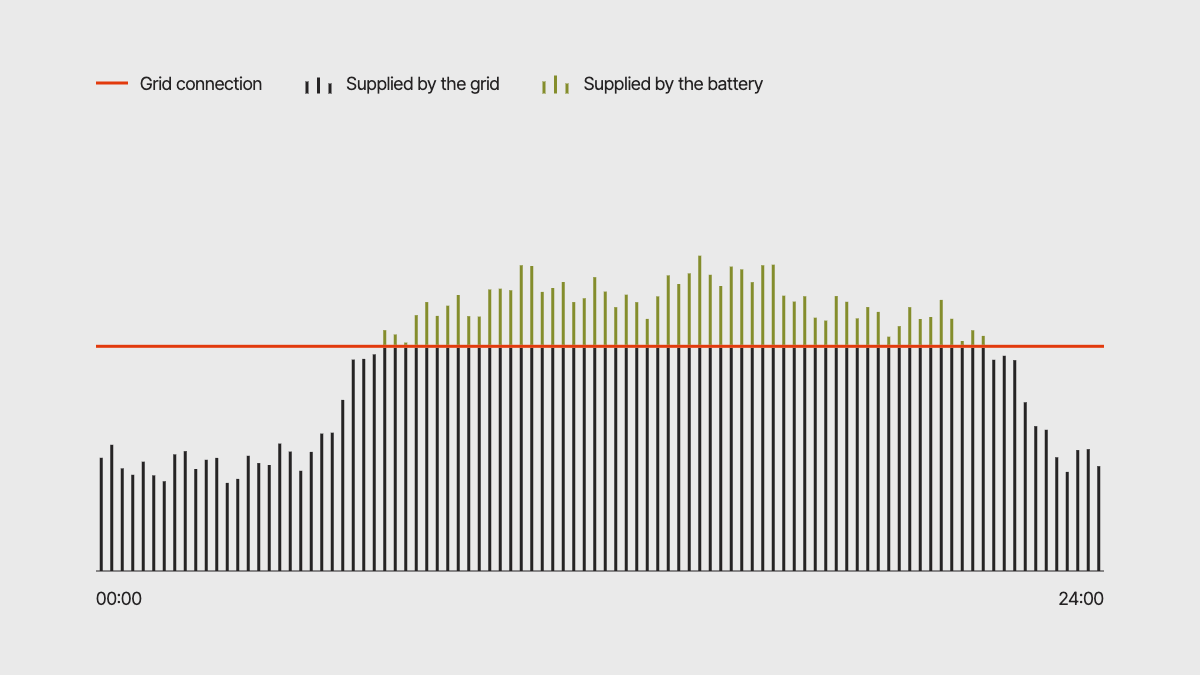
You're planning to switch from 15 diesel trucks to 15 electric trucks. Your existing grid connection is rated at 800 kVA for ongoing operations. If all 15 vehicles return between 6 and 8 pm and charge at the same time, your peak demand reaches up to 2.3 MW, almost three times your available grid capacity.
Say you apply for a physical grid extension. Approval can take anywhere between 5 and 10 years. Until it comes through, your electric fleet either sits idle or charges on a staggered schedule. That means fewer vehicles ready at the same time, and your team having to rework routes around it.
Graph
Your battery storage charges from the grid during the day, when the site needs less power. Between 6 and 8 pm, when the fleet's charging creates its biggest peak, the battery covers most of that additional load.
Actual grid draw stays within your existing 800 kVA connection. All 15 vehicles charge on schedule without the connection needing to be expanded, and they're quickly back where they belong: on the road.
Graph

Testimonial

Bnewable took up the roles of both an energy- and project director for us. From the building permit to negotiations with Fluvius; they absorbed all the risks we faced.

Your project with Bnewable follows the Battery-as-a-Service model: you pay a fee only when the battery is actively lowering your electricity costs, and you keep the larger share of those savings. The rest of the time, we trade with it on the energy market, and you get a cut of that too. Either way, you reduce your energy costs and earn extra revenue, with no investment, and no extra staff required.
1
We size the battery to your consumption, peak loads, solar generation, and grid connection, then calculate what you'd save before you commit to anything.
2
Bnewable covers the full cost of the system. You provide the space and the grid connection; your capital stays in your core business.
3
Energy storage comes with complex permitting. We handle planning, permits, and installation, while your operations continue as usual.
4
We keep the battery running at peak efficiency, cutting demand peaks, maximizing your solar use, or earning market revenue. Maintenance is on us too.
Lorem ipsum dolor sit amet. Ad velit accusamus ea reprehenderit blanditiis quo repellat exercitationem a illum similique. Qui modi reiciendis est veniam fugit ut voluptas asperiores id sunt alias rem animi autem vel laudantium nobis.
Lorem ipsum dolor sit amet. Ad velit accusamus ea reprehenderit blanditiis quo repellat exercitationem a illum similique. Qui modi reiciendis est veniam fugit ut voluptas asperiores id sunt alias rem animi autem vel laudantium nobis.
Yes, a concentrated return window is exactly the situation the battery storage system suits. What decides it is how much energy the fleet needs inside that window and how much power the chargers pull at once. Bnewable's battery storage system covers the gap above your connection capacity for as long as its stored energy lasts, then recharges during the quiet hours.
Charging priority sits with your charge point management system, which is what communicates with the vehicles directly. Bnewable Voltana works alongside it and manages the capacity available to the site, so the two work together to determine how much power there is to share. If you have no charge point management system in place, we recommend resolving that before the battery storage system is sized, since the sequencing changes how much storage you need.
Contact us to explore how Bnewable's battery storage solution works for your (future) electric fleet.